Products
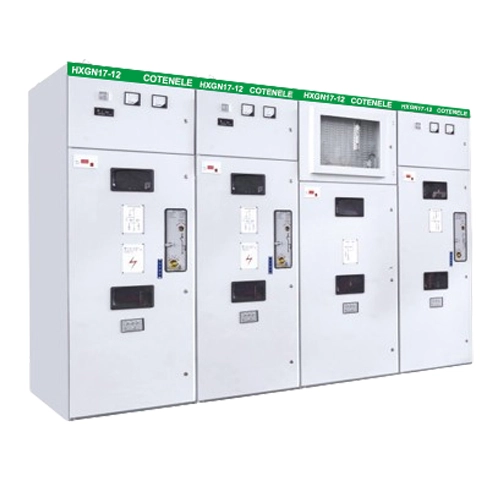
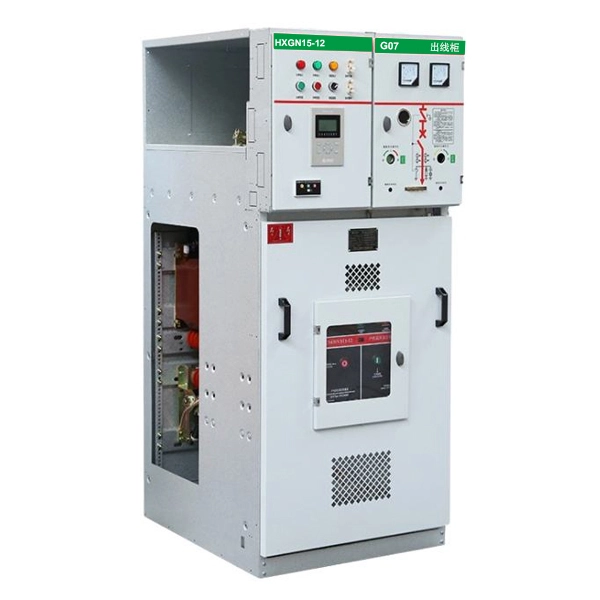
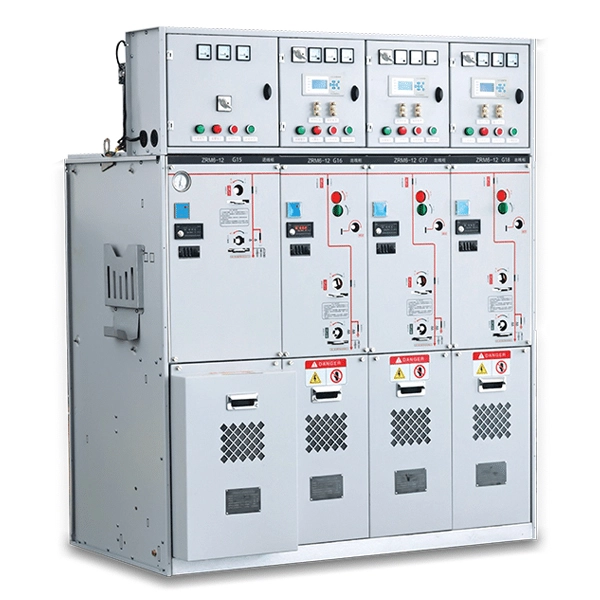
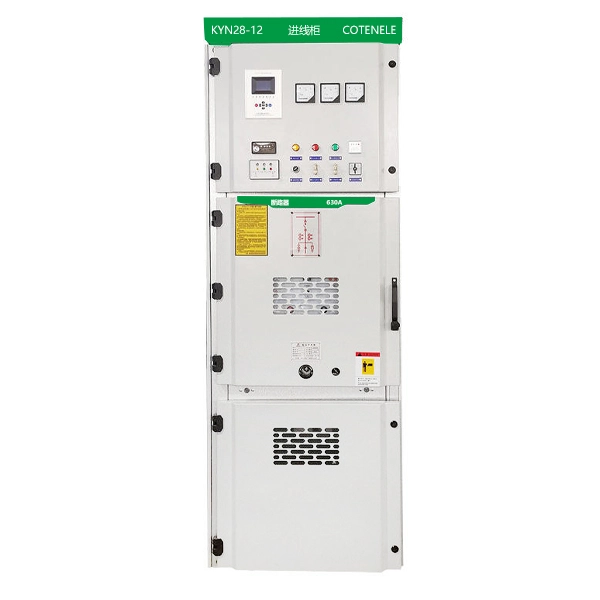
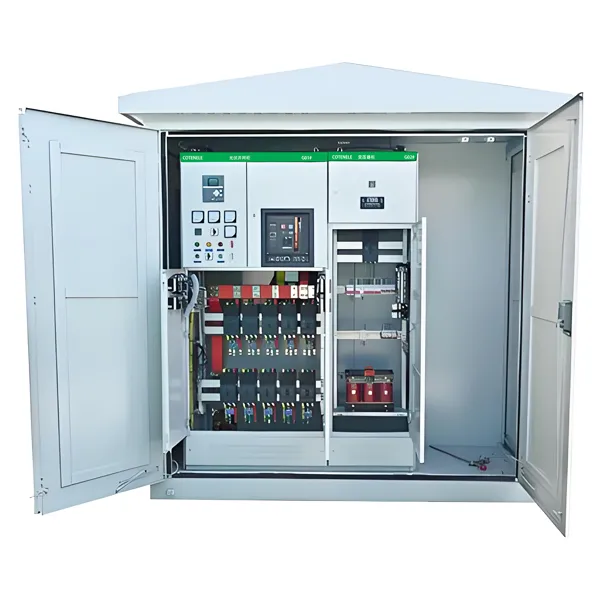
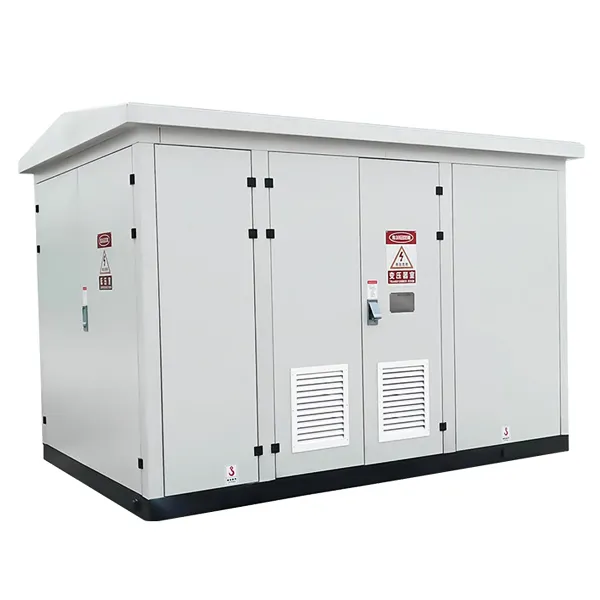
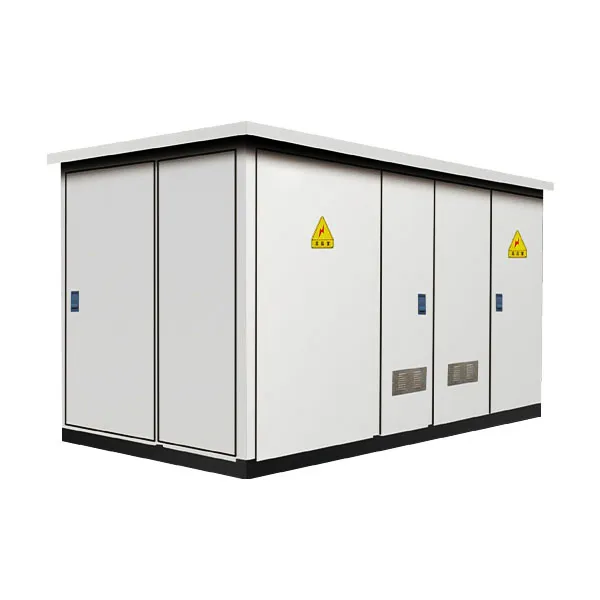
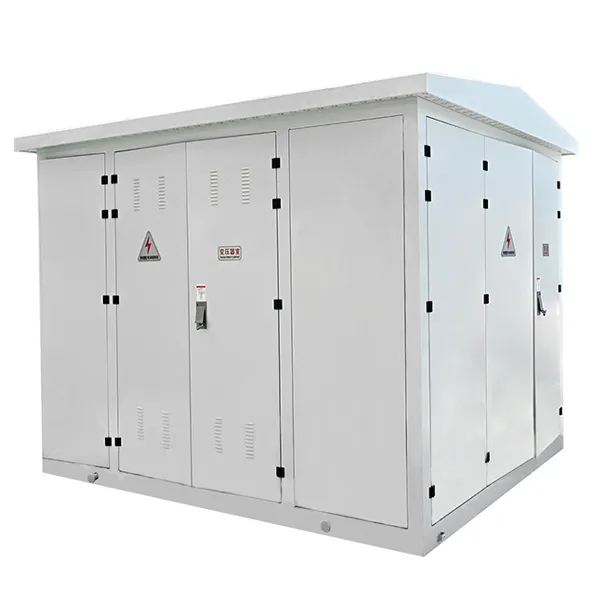
PV Step-up Substation
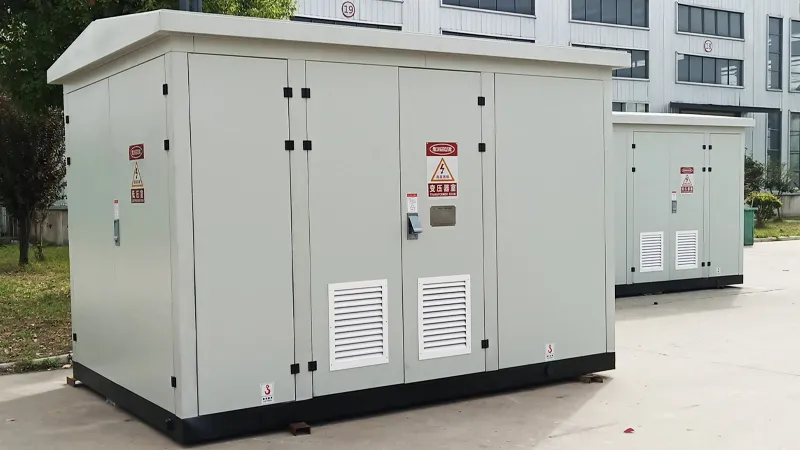
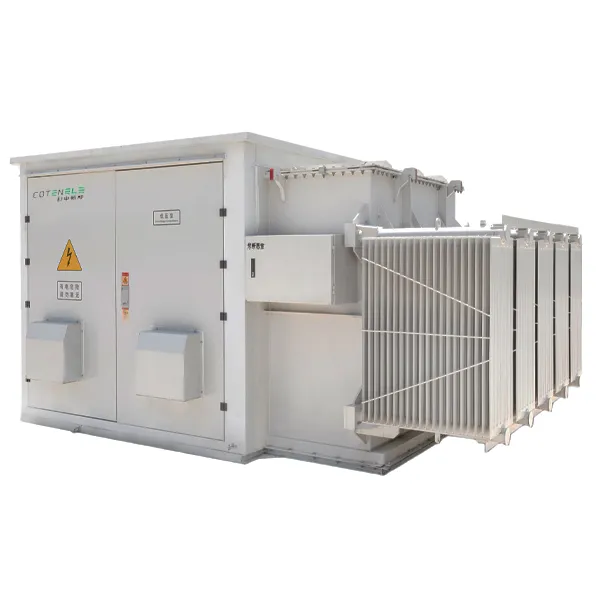
Cotenele is an important partner of State Grid Corporation of China, especially in photovoltaic projects, the PV step-up substation produced by us play an important role in State Grid Corporation of China's photovoltaic power generation projects.The YBW series 11KVand 33KV PV set-up substations produced by Cotenele have been optimized and upgraded to meet the needs of power generation boost in various scenarios.It has the advantages of small volume, high strength, easy installation and easy maintenance.
Cotenele is a manufacturer and exporter for the PV set-up substation, the photovoltaic (PV) step-up substation (also called a PV compact substation or PV step-up box-type substation) is the core electrical equipment in a PV power system that performs power collection, inversion, and voltage boosting for grid connection. It converts the direct current (DC) generated by PV modules into alternating current (AC) through an inverter, and then steps up the voltage to medium or high voltage (10 kV or 35 kV) via a step‑up transformer before feeding it into the grid. The solar power is a clean energy, has made a great contribution to achieving carbon neutrality and reducing the pressure on energy imports. Cotenele YBW series 11KV and 33KV photovoltaic booster substation mostly used in industrial and commercial distributed photovoltaic power stations and centralized power stations. It has the advantages of small volume, high strength, easy installation and easy maintenance. which can meet the needs of power generation boost in various scenarios.
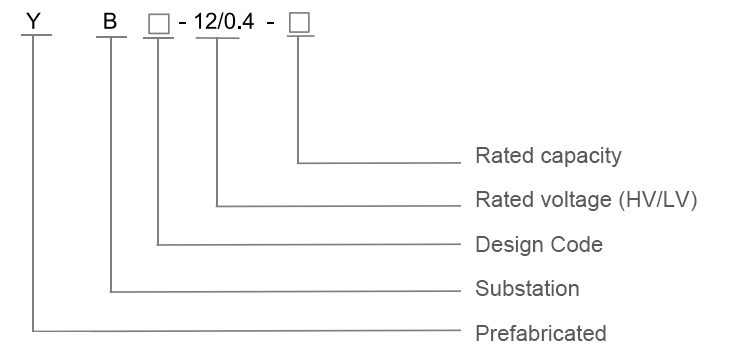
Model and Meanings
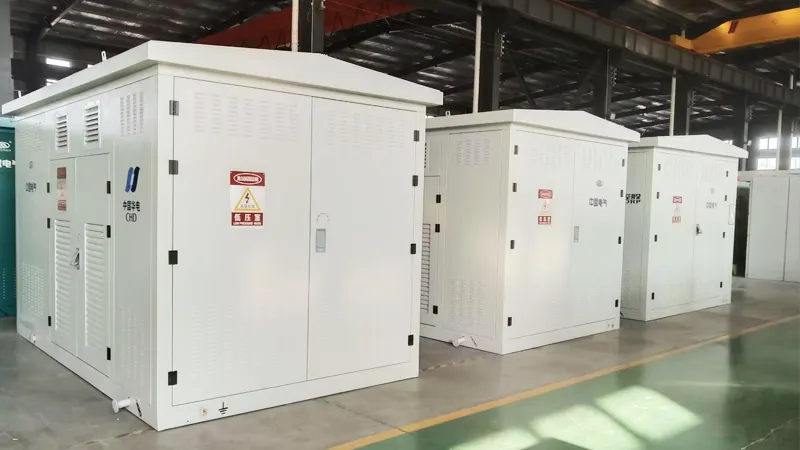
What is a PV Set-up Substation?
1. Definition
A PV step‑up substation is a medium-voltage/low-voltage prefabricated substation (or compact transformer) that integrates medium-voltage switchgear, a step-up transformer, low-voltage switchgear, an inverter, and auxiliary equipment. It takes the low voltage (typically 0.27 kV to 1 kV) from the PV inverter (or after inversion from PV modules) and raises it to 11 kV or 33 kV, then delivers the power to the grid via medium-voltage outgoing lines.
2. Working Principle
The working principle of the PV step-up substation can be divided into three core steps:
Step 1. Collection and Inversion of Direct Current: The DC collector box gathers the direct current generated by the photovoltaic modules and then converts it into three-phase alternating current through the inverter module.
Step 2. AC Voltage Boosting: The step-up transformer boosts the 0.27kv - 0.8kv low-voltage alternating current output by the inverter module through the principle of electromagnetic induction to a medium-voltage alternating current of 11kv - 33kv.
Step 3. Protection and Grid Connection Output: The medium-voltage alternating current after boosting passes through the protection, metering and monitoring of the medium-voltage switchgear, and is then transmitted to the power grid through the high-voltage lines. The entire transmission system realizes real-time telemetry, remote signaling and remote control through intelligent measurement and control devices.
3. Internal Structure
The internal structure of a PV step-up substation usually has three functional sections:
- Low-voltage compartment (inverter compartment): Contains inverter cabinets, low‑voltage incoming cabinets, signal terminal control cabinets, uninterruptible power supplies, and comprehensive intelligent monitoring devices for the PV compact substation. This main function of the inverter compartment is to receive DC from the PV array and perform inversion.
- Transformer compartment: Houses the dedicated step-up transformer (dry-type or oil-immersed), which boosts the low-voltage AC to medium-voltage.
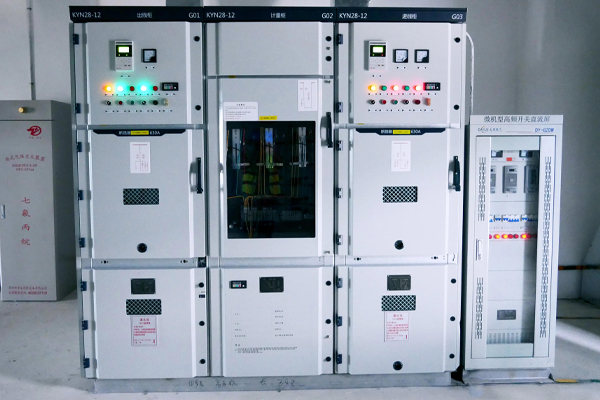
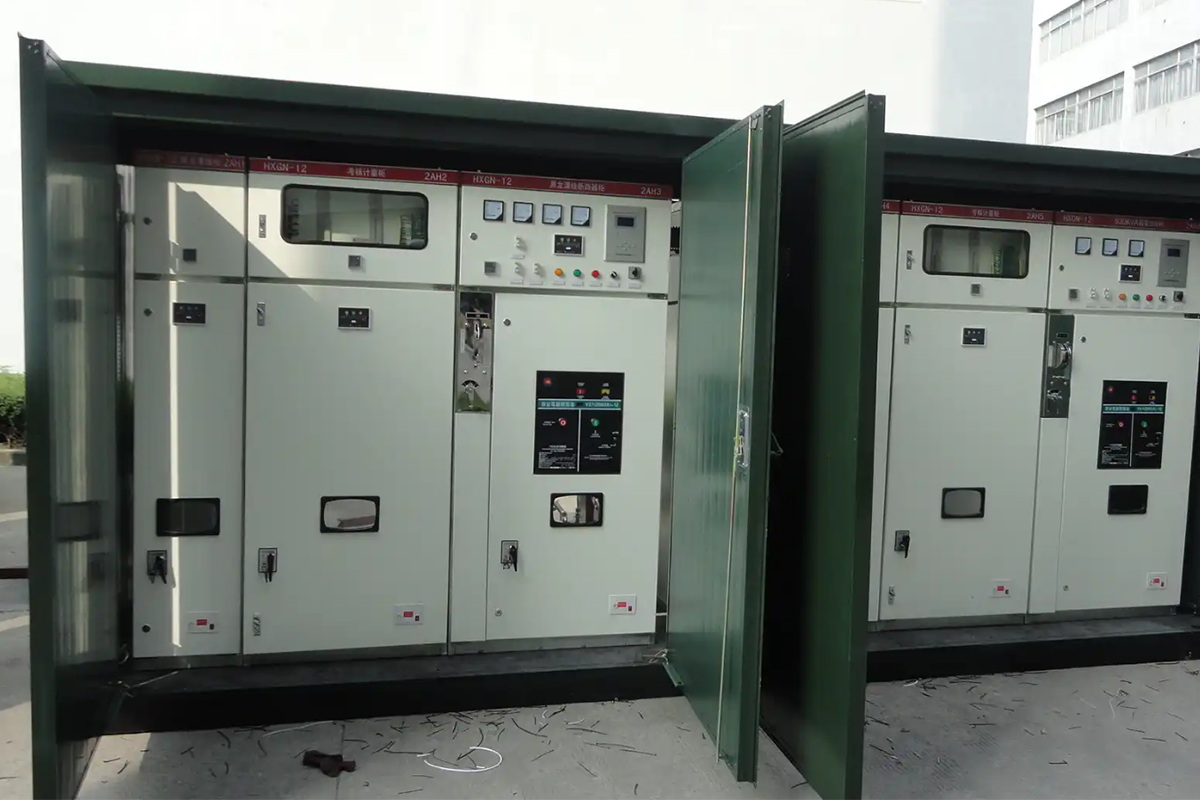
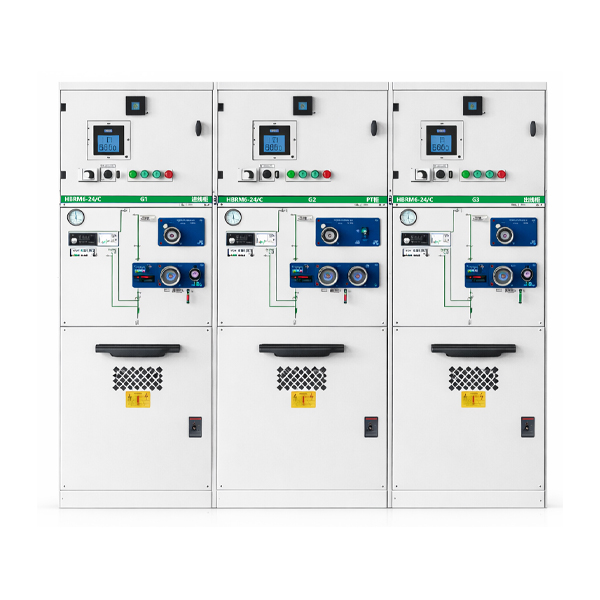
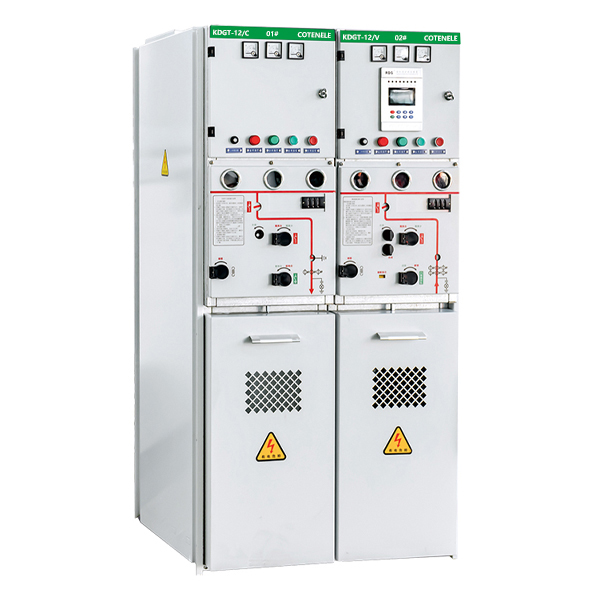
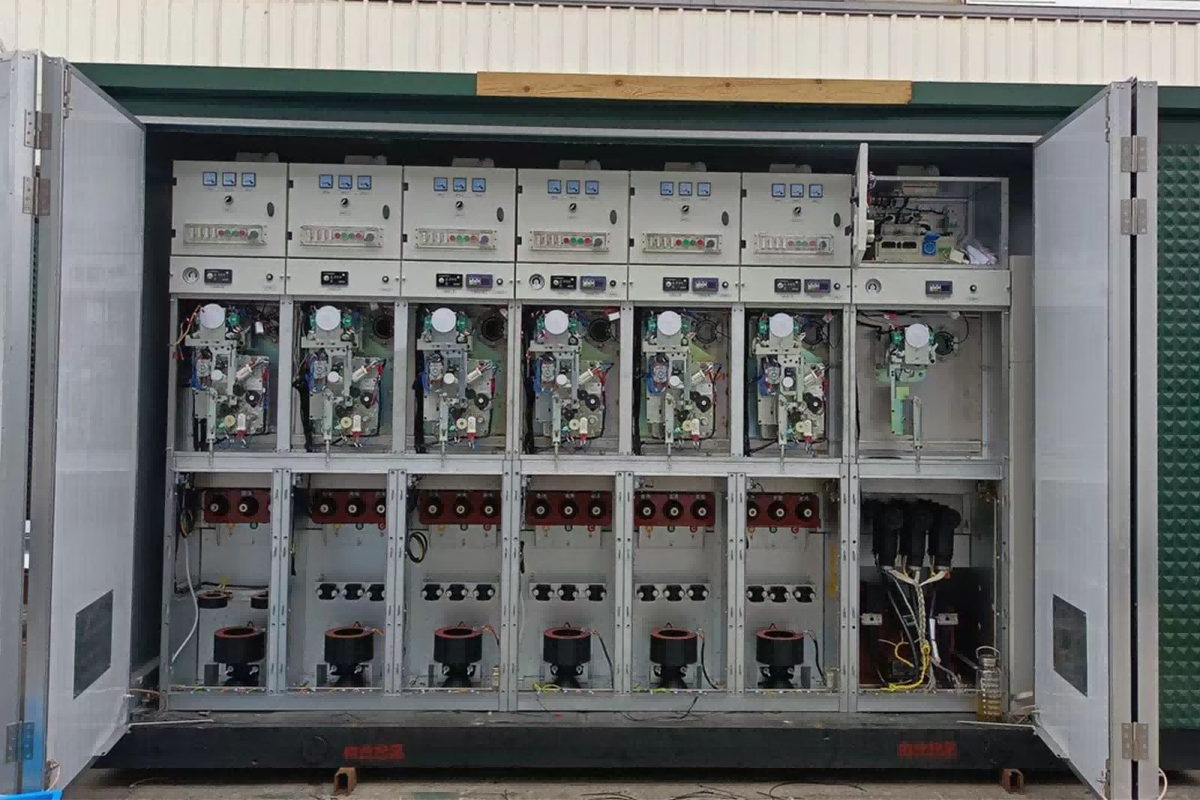
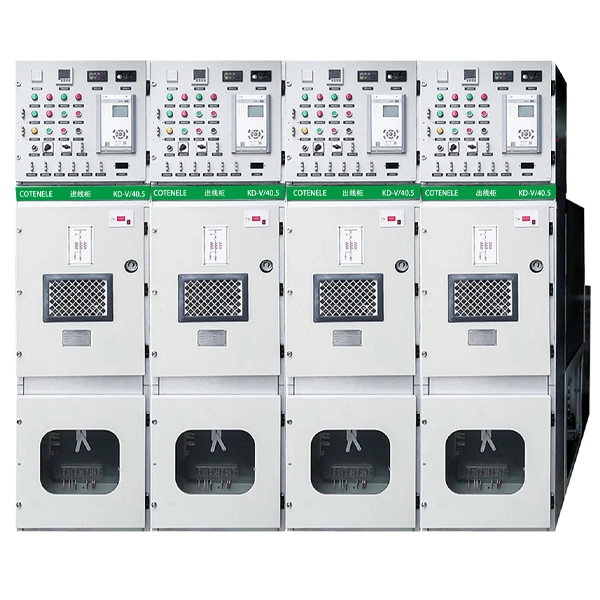
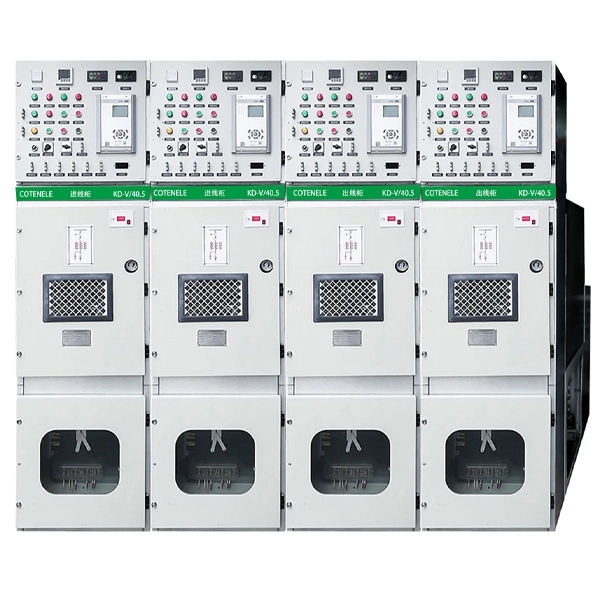
- Medium-voltage compartment: Contains medium-voltage switchgear, metering outgoing cabinets, PV collection incoming cabinets, busbar PT cabinets, load switches, earthing switches, surge arresters, fuses, and other protective devices.
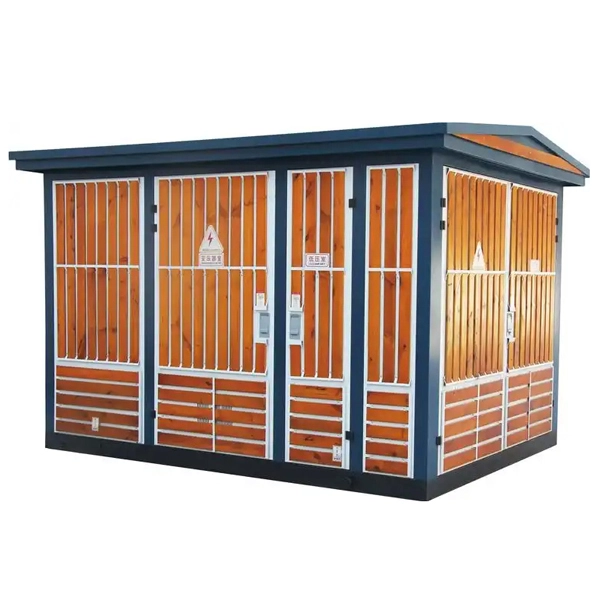
- Depending on the design, the layout can be "I-shaped" (medium-voltage, transformer, and low-voltage compartments arranged in a row) or "L-shaped" (medium-voltage and low-voltage compartments arranged in an L-form). The low-and medium-voltage sections are usually placed front-to-back, with the transformer section on either the left or right side.
Application Scenarios
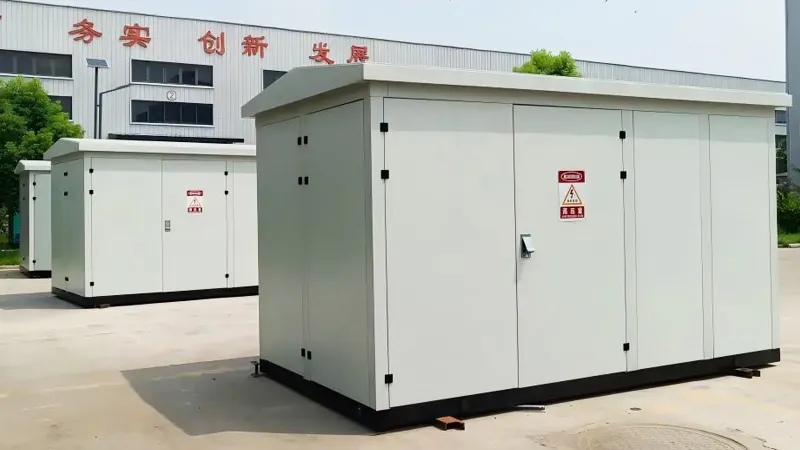
1. Large-scale ground-mounted PV power plants: Collecting and stepping up power from each PV sub‑array for centralised grid connection.
2. Commercial and industrial distributed PV: Suitable for grid connection of rooftop and factory-based distributed PV projects.
3. Agrivoltaic / fishery-complementary PV projects: Adaptable to special outdoor environments in PV generation systems.
4. High-altitude / desert PV farms: Suitable for altitudes of 3,000 m to 4,000 m and severe climatic conditions.
5. Wind-solar hybrid systems: Applicable to both wind and PV power generation scenarios.

Technical Parameters
The main technical parameters of a PV step-up substation are as follows:
| Parameter | Typical Range |
| Rated capacity | 100 KVA – 5,000 kVA |
| Medium-voltage rated voltage | 11 kV, 33 kV (max. 40.5 kV) |
| Low-voltage rated voltage | 0.27 kV, 0.3 kV, 0.315 kV, 0.4 kV, 0.8 kV |
| Rated frequency | 50 Hz |
| Connection group symbol | Yd11, Dyn11, etc. |
| High-voltage switch power-frequency withstand voltage | 95 kV (for 35 kV class) |
| Transformer power-frequency withstand voltage | 85 kV (for 35 kV class) |
| Lightning impulse peak withstand voltage | 200 kV (for 35 kV class) |
| Protection class | Tank: IP68; high- and low-voltage compartments: IP54 |
Note: Common transformer capacities include 1000 kVA, 1250 kVA, 1600 kVA, 2000 kVA, and 3150 kVA.
Differences Between European-style and American-style Compact Substations
European‑style and American‑style compact substations are the two main types used in PV applications. Their key differences are summarised below:
| Aspect | European-style | American-style |
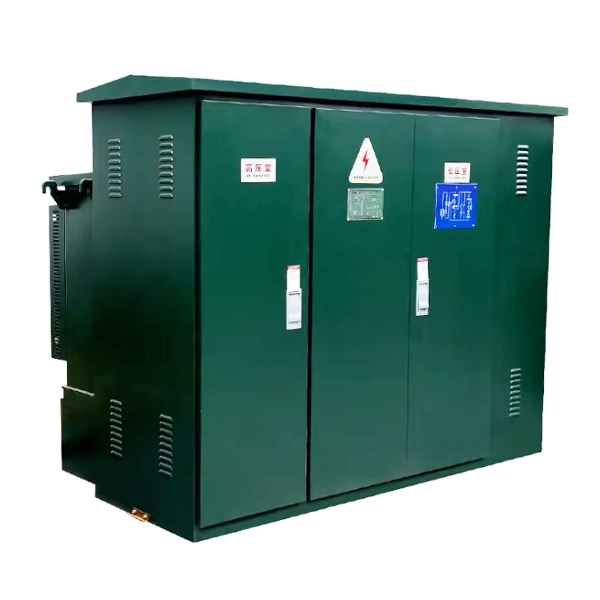
| Structural design | Independent compartments for high-voltage, transformer, and low-voltage sections | High-voltage components are enclosed inside the transformer tank, integrated with the transformer |
| Transformer type | Mostly dry-type (oil-immersed also possible) | Typically oil-immersed |
| High-voltage protection | SF₆ load switch + fuse combination, supports ring-network operation | Drop-out fuse + backup fuse + load switch |
| Physical size | Relatively large | Compact — about 1/3 the size of the European type |
| Heat dissipation | Slightly inferior | Good heat dissipation |
| Maintenance convenience | Separate components make inspection and maintenance easy | Compact design makes maintenance more complex |
| Cost | Higher | Lower |
| Applicable scenarios | Areas with more personnel, where aesthetics and safety are important | Remote sites where space and cost are critical |
| Insulating medium | Epoxy resin (dry-type) or transformer oil (oil-immersed) | Transformer oil |
In practice, American‑style compact substations are widely adopted in PV projects because of their compact size and lower cost. European-style units are preferred in scenarios requiring ring-network power supply, higher reliability, and easier maintenance. In recent years, the Chinese-style compact substation, which combines the advantages of both, has also gained popularity in the PV sector.
Project Site
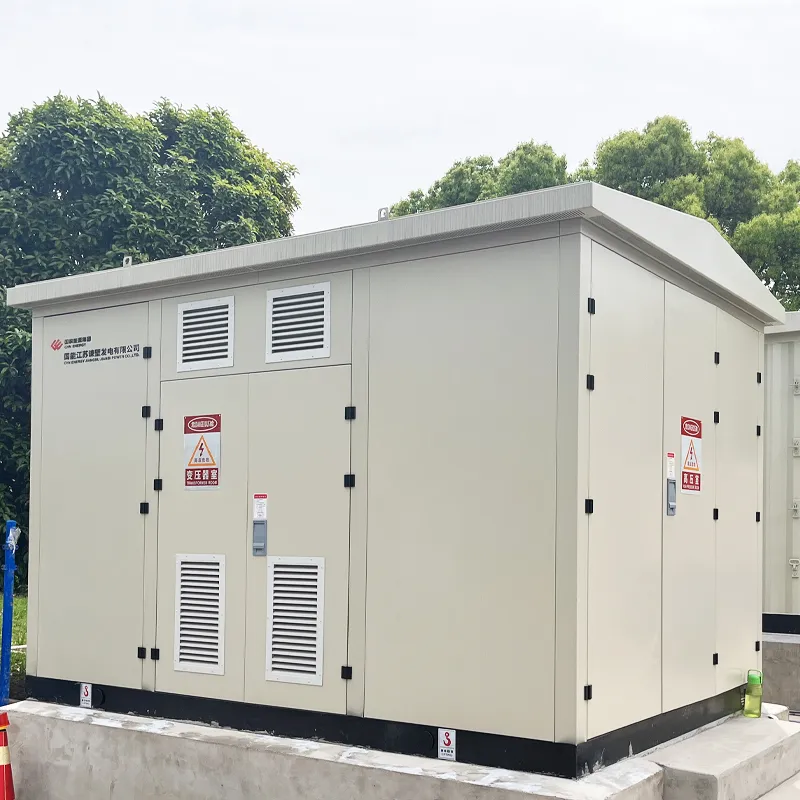
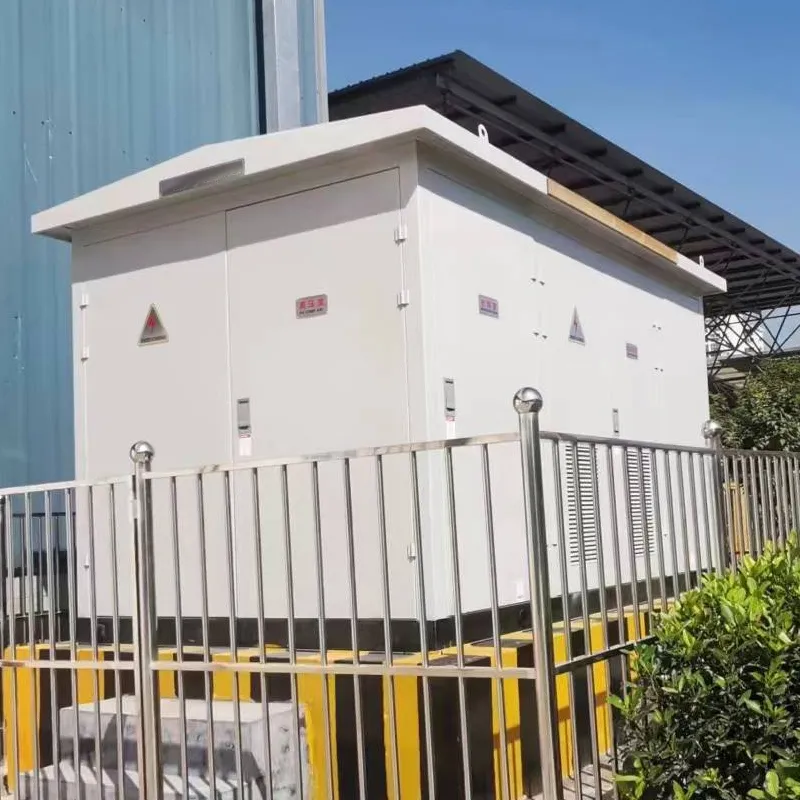
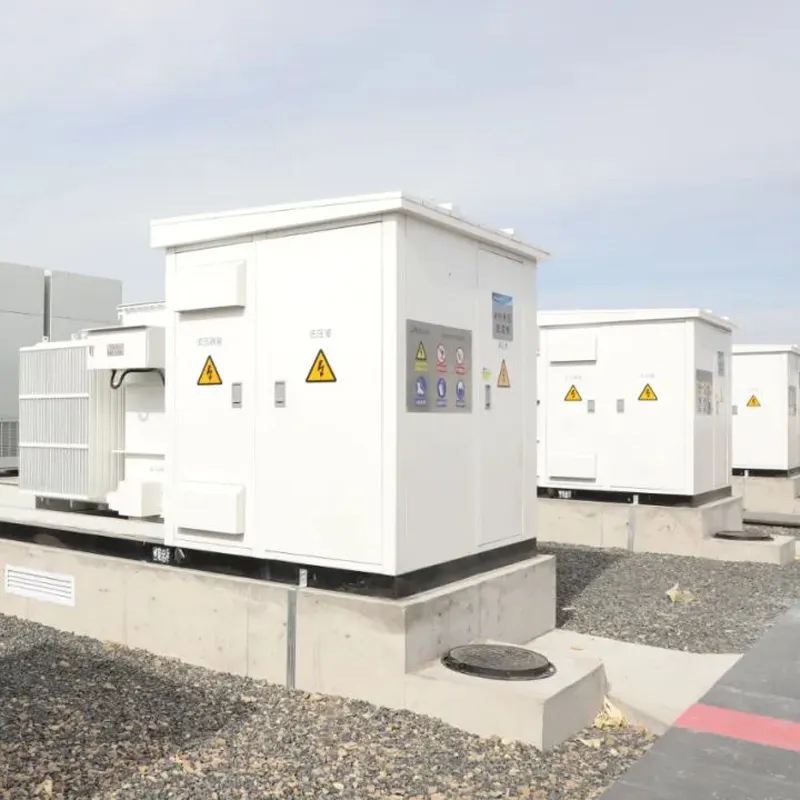
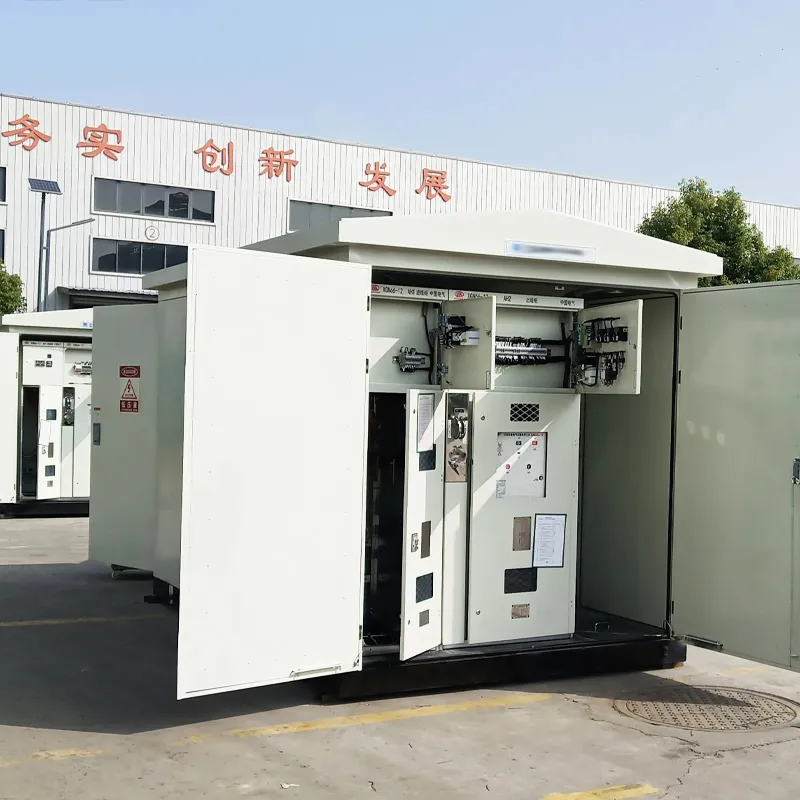
Send Inquiry
Contact Info
-
Address
Building 2, Changhong Industrial Park, No. 501 Liule Road, Liushi Town, Yueqing City, Wenzhou City, Zhejiang Province, China
-
Tel
-
Email
Mobile/WhatsApp:
News Recommendations