
News
How to Select the Right RMU for Medium Voltage Distribution Applications
Introduction
A circuit breaker is one of the most widely deployed pieces of medium voltage switchgear in the world. It sits inside compact substations in dense urban neighborhoods, at the base of wind turbines, in the basements of commercial towers, and at the perimeter of industrial plants. Its job is unglamorous but critical: connect distribution feeders in a ring, protect transformers, and isolate faults without taking the entire network down.
Because RMUs are produced in vast quantities and deployed in large fleets, there is a temptation to treat them as a commodity—pick a voltage, pick a current, compare prices. This approach works until it doesn't. A misspecified RMU can create operational headaches that compound across dozens or hundreds of installations. A configuration that works perfectly in a temperate city center may fail prematurely in a coastal environment with salt spray. A protection scheme that was adequate for a radial network may behave unpredictably when the utility reconfigures the ring.
Selecting the right RMU requires understanding where it will operate, how it will be accessed and maintained, what it must protect, and how the network around it might change over its 30-year service life. This article examines each of these factors in turn.
Start with the Application, Not the Catalogue
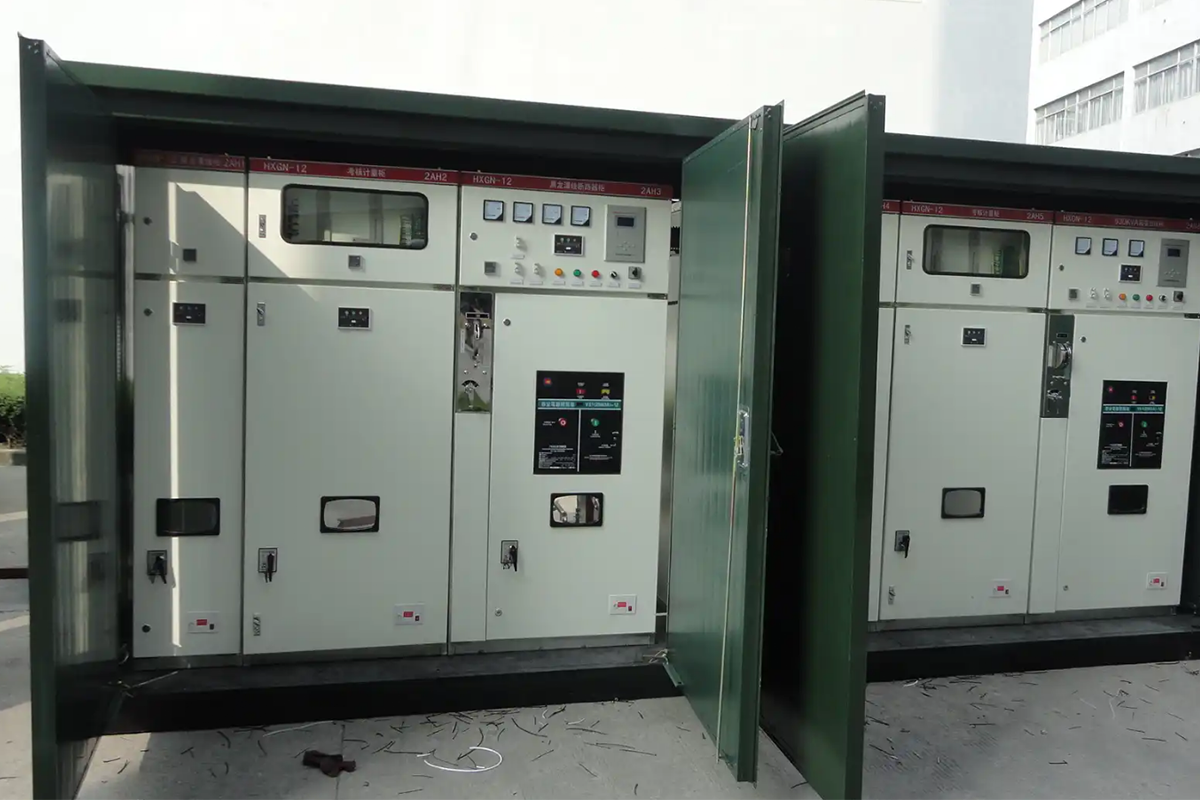
The most expensive RMU specification error is selecting a standard configuration from a catalogue before understanding the application context. Three application factors should shape every RMU selection decision.
Indoor versus outdoor installation. An indoor RMU installed in a climate-controlled electrical room faces a benign environment. Temperature is stable. Humidity is controlled. There is no exposure to rain, dust, or salt. An outdoor RMU installed in a pad-mounted enclosure near the coast faces a very different reality. Temperature swings can cause internal condensation. Salt spray accelerates corrosion on exposed metal parts. Ultraviolet radiation degrades polymeric insulation and seals over time. The enclosure must be designed for these conditions, with appropriate IP ratings, anti-condensation measures, and corrosion protection.
Access and maintenance philosophy. An RMU installed in a locked substation in a city center can be visited by a maintenance crew in 30 minutes. An RMU installed at the base of a wind turbine on a mountain ridge may only be accessible during certain weather windows, and a site visit may cost several hours of travel time. The more remote the installation, the stronger the case for sealed-for-life designs that require no gas monitoring, no contact maintenance, and no periodic intervention. The maintenance philosophy should be built into the specification, not discovered after commissioning.
Existing network configuration. An RMU that is being added to an existing ring must be compatible with the protection philosophy, the communication protocol, and the physical interface of the equipment already in service. If the existing network uses a specific protection relay platform, the new RMU should be capable of integrating with it. If the existing ring uses a particular module configuration, the new unit should fit into that topology without requiring custom engineering.
Determine the Functions Each Module Must Perform
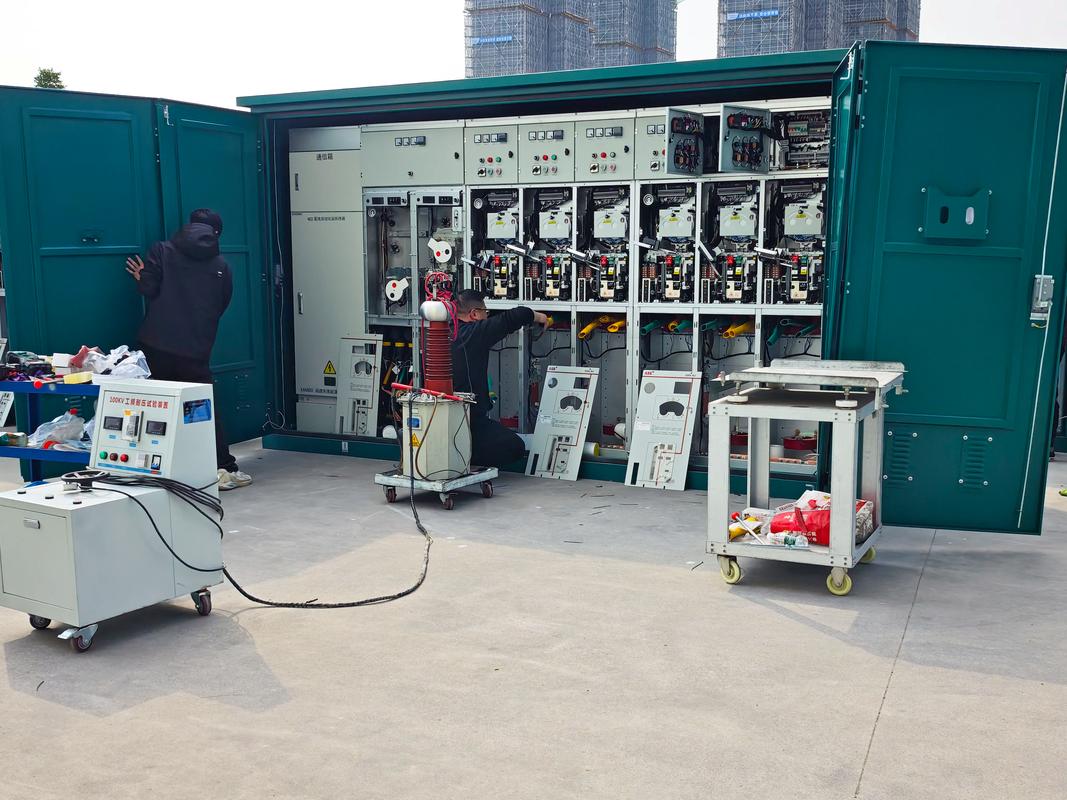
An RMU is not a single device. It is an assembly of modules, each performing a distinct function. The first specification task is to determine which functions are needed and how many of each.
Ring feeder modules. These are the load break switch units that connect the RMU into the distribution ring. At least two are required—typically designated as incoming and outgoing, though in a ring configuration power can flow in either direction. Each ring feeder module contains a load break switch capable of interrupting the rated load current. The most common rating is 630A, which covers the vast majority of distribution ring applications.
Transformer protection modules. These modules supply and protect distribution transformers that step medium voltage down to low voltage for local consumption. Protection can be provided by a fuse (the simplest and most common approach), a circuit breaker (where selectivity or frequent operation is required), or a fused load break switch combination. The choice between fuse and breaker protection depends on the transformer size, the network fault level, and the utility's protection coordination philosophy.
Bus coupler modules. In larger RMU assemblies, a bus coupler can connect or separate two busbar sections. This enables operational flexibility: one transformer can be taken out of service while the other supplies both sections, or the ring can be split into two independent segments for fault isolation.
Direct metering modules. Where the utility requires revenue metering at the RMU, a dedicated metering module accommodates current and voltage transformers sized for billing accuracy. This module typically has no switching function—it is a measurement point only.
COTENELE supplies RMU modules in all of these configurations, including incoming and outgoing ring feeders rated 630A, transformer protection modules with either fuse or circuit breaker protection, bus couplers, and direct metering compartments. Standard configurations of three, four, and five modules are available, with custom arrangements quoted to the customer's single-line diagram.
Select the Insulation Technology
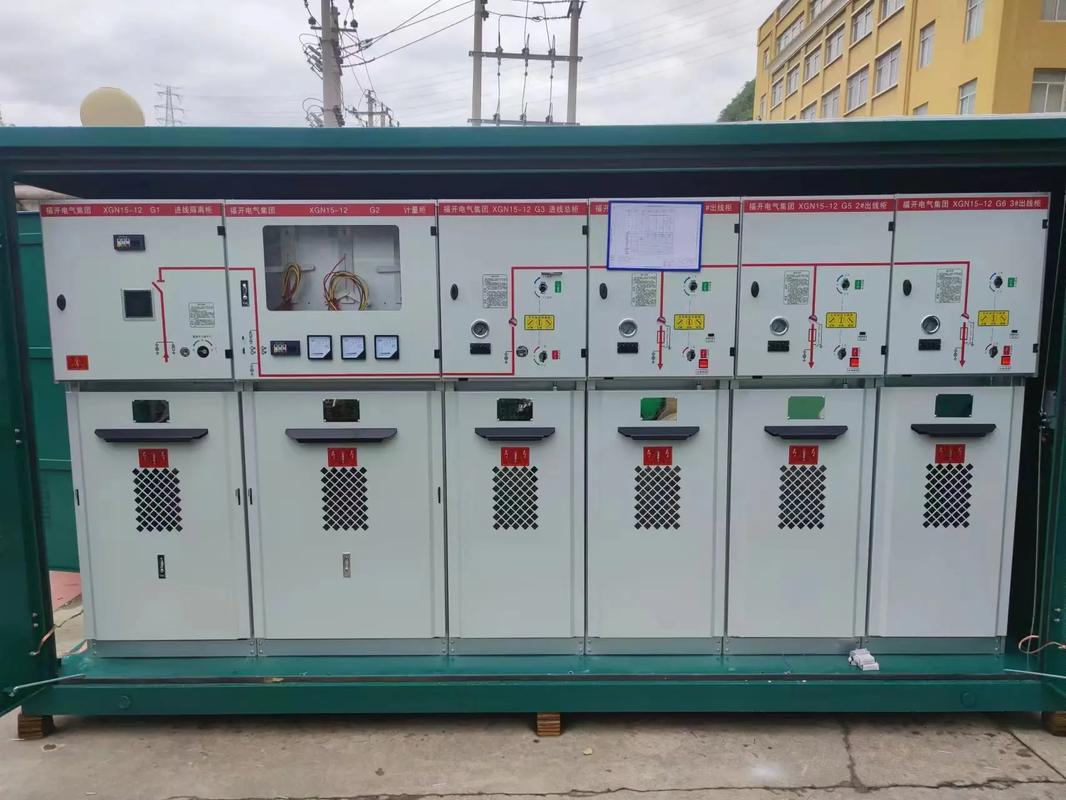
The insulation medium inside the RMU tank determines the equipment's environmental footprint, maintenance profile, and compliance status. This decision has grown in importance as SF₆ regulations have tightened globally.
Dry air and nitrogen insulation have become the primary replacements for SF₆ in RMU applications. Both gases have zero global warming potential. Both are non-toxic, non-flammable, and require no special handling at end of life. In a modern dry air or N₂ insulated RMU, the gas tank is filled and sealed at the factory. It requires no pressure monitoring, no refilling, and no gas-related maintenance for its entire 30-year design life. The tank itself is typically stainless steel, providing corrosion resistance that matches the equipment's electrical endurance.
COTENELE's 24kV SF₆-free RMU uses dry air as the insulating medium in a sealed-for-life stainless steel tank. The design has been type-tested to IEC 62271-200 with short-circuit withstand of 25kA for four seconds and internal arc classification IAC AFLR at 20kA for one second. The tank leaves the factory sealed and tested. From the operator's perspective, there is no gas system to manage.
Solid insulation offers an alternative approach by eliminating gas entirely. The live conductors and switching contacts are encapsulated in epoxy resin. There is no gas tank, no pressure vessel, and no possibility of gas leakage. Solid-insulated RMUs are inherently compact and well-suited to harsh environments where humidity, salt, or airborne contaminants would challenge gas-insulated or air-insulated designs. The trade-off is that solid-insulated modules are typically less flexible when reconfiguration is needed and carry a higher unit cost.
The SF₆ legacy. Traditional SF₆-filled RMUs are still in widespread operation, but they are no longer specifiable for new installations in markets where the EU F-gas Regulation or equivalent restrictions apply. Engineers should verify the regulatory status of the target market before including SF₆ equipment in a specification. Even where SF₆ is not yet banned, specifying SF₆ equipment creates a long-term compliance liability that many asset owners are now unwilling to accept.
Verify Rated Parameters Against Site Conditions
The nameplate ratings on an RMU datasheet are based on standard reference conditions. Site conditions often differ from these references, sometimes substantially. The engineer's job is to verify that the ratings are valid for the actual installation environment.
Rated voltage must exceed the nominal system voltage, with allowance for temporary overvoltages during earth faults or switching transients. For a 20kV system, a 24kV rated RMU is common. For a 33kV system, a 36kV or 40.5kV rating is required. The power-frequency withstand and lightning impulse withstand voltages should be confirmed against the project's insulation coordination study.
Rated current for ring feeder modules is normally 630A, which accommodates the continuous current in most distribution rings. Transformer protection modules are typically rated 200A or lower, corresponding to the fuse rating or the circuit breaker setting. The rating must be valid at the site altitude and maximum ambient temperature. If the installation is above 1000 metres, or if ambient temperatures regularly exceed 40°C, derating factors apply and a higher nameplate rating may be needed to deliver the required continuous current.
Short-circuit withstand current is the parameter that most directly affects the RMU's physical robustness. The rating—typically 20kA or 25kA for four seconds—must match or exceed the calculated fault level at the point of installation. A short-circuit study that uses current network data and accounts for projected future generation additions is the only reliable basis for specifying this parameter. Underspecifying it creates a catastrophic failure risk. Overspecifying it adds unnecessary cost.
Understand the Maintenance Philosophy of Each Design
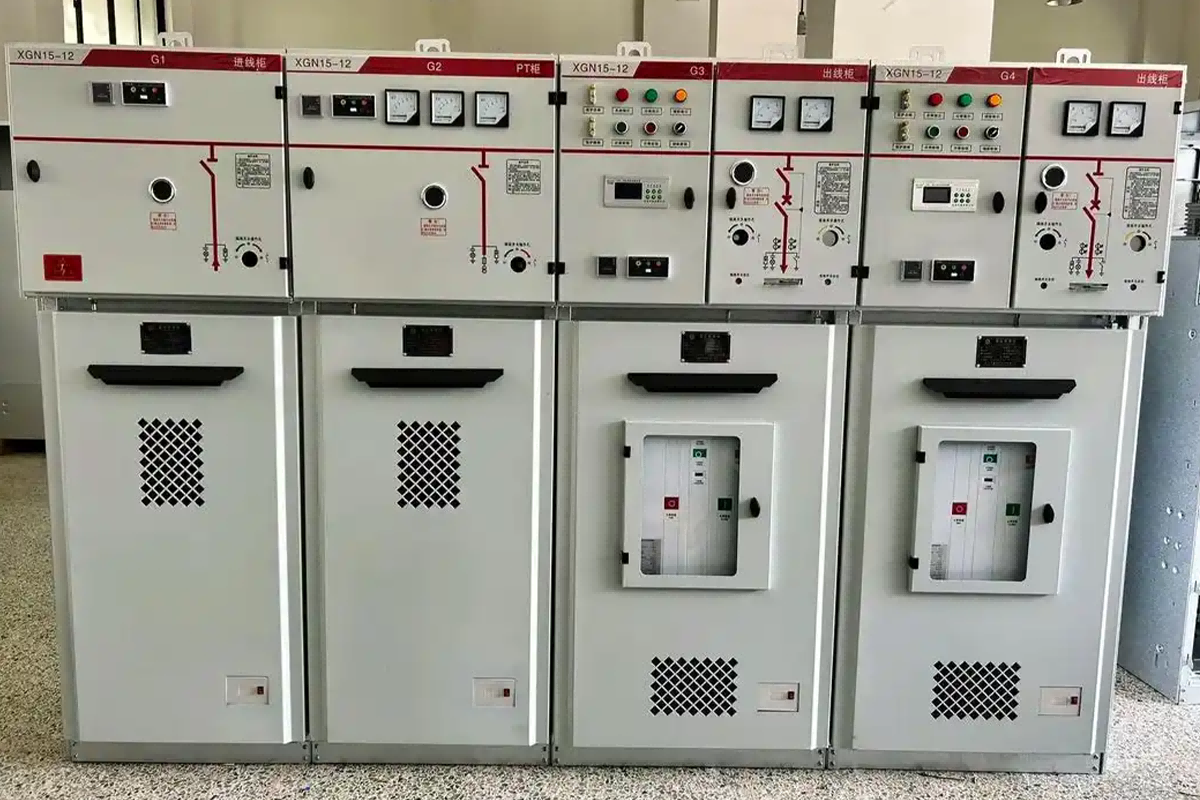
RMU maintenance requirements vary substantially by design, and this variation has direct operational cost implications over the equipment's 30-year life.
Sealed-for-life gas tanks are the modern standard for SF₆-free RMUs. The tank is filled with dry air or nitrogen at the factory, tested for leaks, and permanently sealed. There is no gas pressure gauge on the front panel—there is nothing to read. There is no refilling port—there is nothing to refill. The maintenance manual contains no gas-related procedures because there are none. For an operator managing a fleet of hundreds of RMUs, eliminating gas handling from the maintenance program is a significant operational saving.
Fuse replacement is the most common maintenance activity on an RMU, and the only one that should be required during normal operation of a modern sealed unit. When a transformer protection fuse operates, the fuse link must be replaced. The design should allow this to be done safely, with the ring feeder modules remaining in service while the transformer protection module is isolated. Fuse replacement procedures, access requirements, and the availability of replacement fuse links should be reviewed before specification.
Vacuum interrupter life. In RMU designs that use vacuum interrupters for the circuit breaker or load break function—which is most modern RMUs—the interrupters are sealed for life and require no maintenance. The mechanical endurance of the operating mechanism, typically rated for thousands of operations, determines the interval at which mechanism inspection or overhaul may be needed. For most distribution applications, where switching operations are infrequent, the mechanism will outlast the equipment's installed life.
Configuration Checklist for Common Application Scenarios
Different applications require different RMU configurations. While every project has unique requirements, several common patterns serve as useful starting points.
Urban distribution substation. A typical configuration is three modules: two ring feeder modules (load break switches) and one transformer protection module (fused). This provides the ring connection and supplies a local distribution transformer. In some networks, a four-module configuration with an additional transformer protection module is used where two transformers are installed at the same site.
Wind farm collector network. Wind turbine transformers are typically protected by fused modules in RMUs installed at the base of each turbine or in small groups. The RMU ring feeders connect multiple turbines in a daisy-chain or ring back to the collector substation. Switching frequency can be higher than in urban distribution due to turbine start-stop cycles. Vacuum interrupters with high mechanical endurance are preferred for the switching elements.
Commercial building or data center. Where the RMU supplies a facility with on-site generation or dual utility feeds, a bus coupler module may be needed to manage the interconnection between two sources. Transformer protection modules with circuit breakers rather than fuses are sometimes preferred for their ability to be remotely reset and for easier coordination with downstream protection.
Critical infrastructure. For hospitals, airports, and continuous-process industrial plants, RMU configurations should support selective coordination and provide the ability to isolate a faulted section without interrupting supply to healthy sections. Redundancy in the ring feeder configuration—such that no single cable fault takes down the entire supply—should be designed into the ring topology, not just the RMU specification.
Standards Compliance and Documentation
Type testing to IEC 62271-200 is the minimum requirement for RMUs in international markets. The type-test program covers dielectric tests, temperature rise, short-circuit withstand, internal arc classification, and mechanical endurance. Engineers should request the complete type-test reports, not summary certificates, and should verify that the tested configuration matches the configuration being quoted.
Beyond type testing, the documentation package is part of the product. Routine test reports from the factory for every module. A declaration of conformity to applicable regulations—including the EU F-gas Regulation for SF₆-free equipment. An installation and operation manual that accurately describes the maintenance requirements, or lack thereof, for the specific design.
COTENELE provides IEC 62271-200 type-test certificates, routine test reports, and a full documentation package with every RMU quotation. The documentation is available at tender stage, enabling consulting engineers and utility evaluators to complete their technical review before contract award.
Conclusion
Selecting an RMU is an exercise in thinking through the equipment's entire service life—where it will sit, what it will be asked to do, how it will be maintained, and how the network around it might change. The right choice is not necessarily the one with the lowest purchase price. It is the one that minimizes total cost of ownership over three decades while providing the reliability, safety, and operational flexibility the application demands.
For engineers preparing an RMU specification, the sequence of decisions is clear. Start with the application environment. Determine the required module functions. Select an insulation technology that meets current and foreseeable environmental regulations. Verify ratings against site conditions. Understand the maintenance requirements of the chosen design. Confirm that documentation and compliance evidence are available before the order is placed.
COTENELE supports this process with type-tested, production-ready SF₆-free RMUs configured to the project single-line diagram. Our engineering team is available to review application requirements, recommend module configurations, and provide complete documentation packages for tender submission.
Specifying an RMU for Your Next Project?
COTENELE supplies 24kV SF₆-free ring main units with dry air insulation, IEC 62271-200 type testing, and complete documentation packages. Standard and custom module configurations available.
About COTENELE
COTENELE is a specialized manufacturer of medium voltage switchgear, including SF₆-free eco-friendly gas insulated switchgear, vacuum circuit breakers, ring main units, and metal-clad panels for 12 kV to 40.5 kV applications. Our products serve utilities, data center operators, renewable energy developers, and industrial buyers across Europe, Asia, and the Middle East. Every product is type-tested to applicable IEC standards, with complete documentation provided for tender submission and project delivery.
Related News
Leave me a message