
News
Medium Voltage Switchgear Applications in Data Centers and Renewable Energy Projects
Two Industries, One Common Dependency
Data centers and renewable energy projects appear to have little in common. One is a climate-controlled building filled with server racks, where the primary output is digital information. The other is a sprawling outdoor installation exposed to weather, where the primary output is electrical power fed into a transmission grid.
Beneath the surface, however, they share a critical dependency: medium voltage switchgear that performs flawlessly under operating conditions that would have been considered unusual a decade ago. Both industries have grown at extraordinary speed. Both face intense pressure on project timelines and capital costs. And both are increasingly specifying SF₆-free equipment—data centers driven by corporate sustainability commitments, renewable energy projects driven by the logic that clean generation should not depend on high-GWP infrastructure.
This article examines the medium voltage switchgear requirements of these two sectors in detail. The focus is on the technical demands that drive equipment selection, the configurations that have proven effective, and the documentation and compliance requirements that procurement teams in both industries now consider mandatory.
Part One: Data Centers
The Electrical Architecture of a Modern Data Center
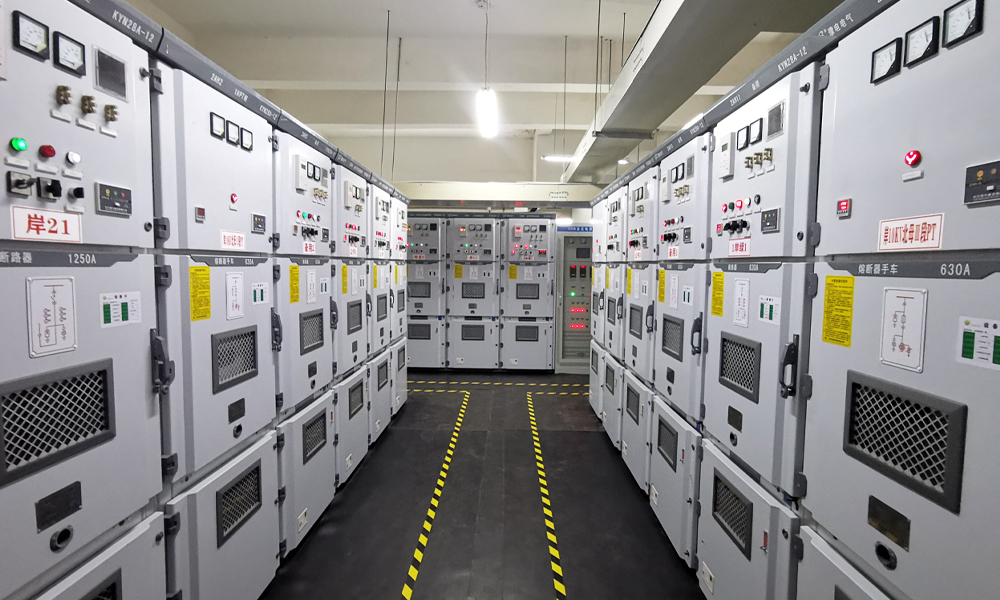
A hyperscale data center is fundamentally an electrical conversion facility. Power arrives at high or medium voltage from the utility grid, steps down through multiple transformation stages, and ultimately reaches server racks at low voltage with extraordinary reliability requirements. The industry standard for uptime—five nines, or 99.999% availability—permits just over five minutes of downtime per year, including all planned maintenance.
Medium voltage switchgear sits at the critical junction between the utility supply and the data center's internal distribution network. In a typical architecture, utility feeders at 10 kV to 36 kV enter the facility's on-site substation, where medium voltage switchgear provides incoming feeder protection, transformer primary protection, and bus section switching. Downstream, additional medium voltage switchgear may serve large chiller plants, UPS input switchboards, and generator paralleling switchgear for backup power systems.
The switchgear in this architecture must satisfy several demanding criteria simultaneously. It must be compact enough to fit within the building footprint, which is expensive real estate. It must be reliable enough that maintenance interventions are measured in hours per decade rather than hours per year. And it must be able to integrate with the data center's building management system and power monitoring platform, providing real-time data on switch position, protection events, and equipment condition.
Why Vacuum Circuit Breakers Are Standard
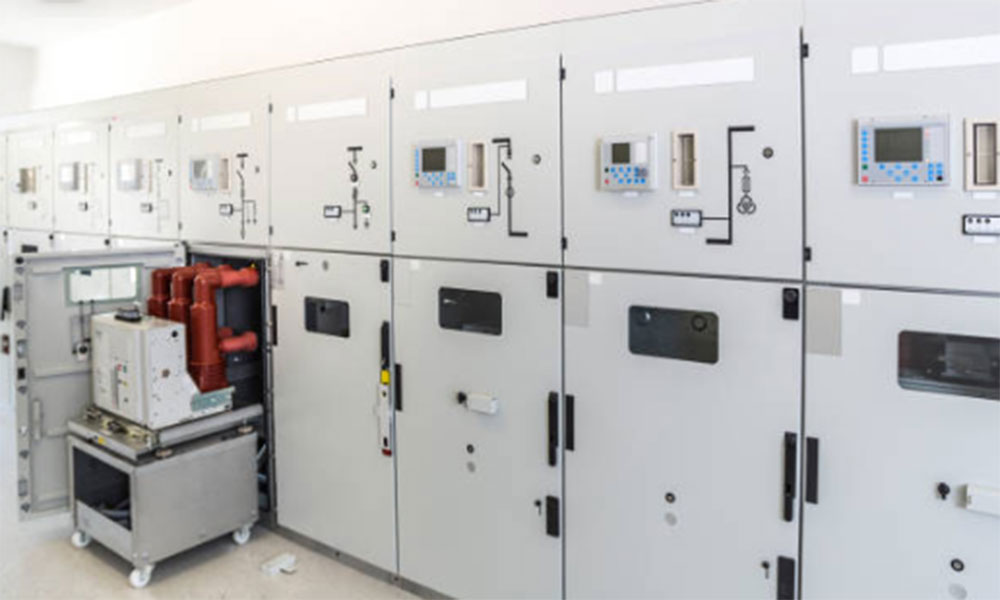
The vacuum circuit breaker has become the default choice for medium voltage switching in data centers for reasons that are both technical and operational.
Technically, a vacuum interrupter extinguishes the arc inside a sealed ceramic envelope where there is nothing to burn, nothing to degrade, and nothing to leak. The absence of gas means the absence of gas-related maintenance. For a data center operator with a facility that may run for fifteen years without a major shutdown, any equipment that requires periodic attention is a liability. A vacuum circuit breaker with an M2-class operating mechanism rated for 10,000 mechanical operations can serve for the entire life of the facility without a single maintenance intervention on the interrupter itself.
Operationally, vacuum circuit breakers are well-suited to the load profile of a data center. Data center load is relatively steady-state—servers do not stop and start like industrial motors—which means the breaker's electrical endurance is rarely tested by frequent fault interruption. The primary operational requirement is reliable switching during planned transfers between utility and generator sources, which is mechanically demanding but electrically straightforward. A well-designed stored-energy spring mechanism can perform this function consistently for decades.
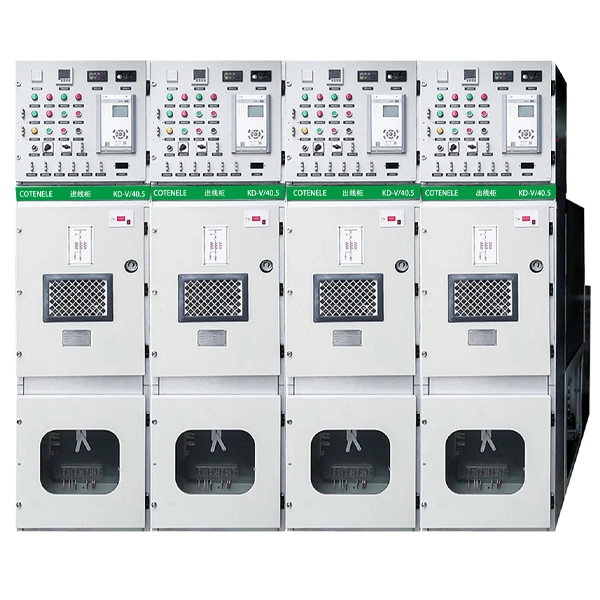
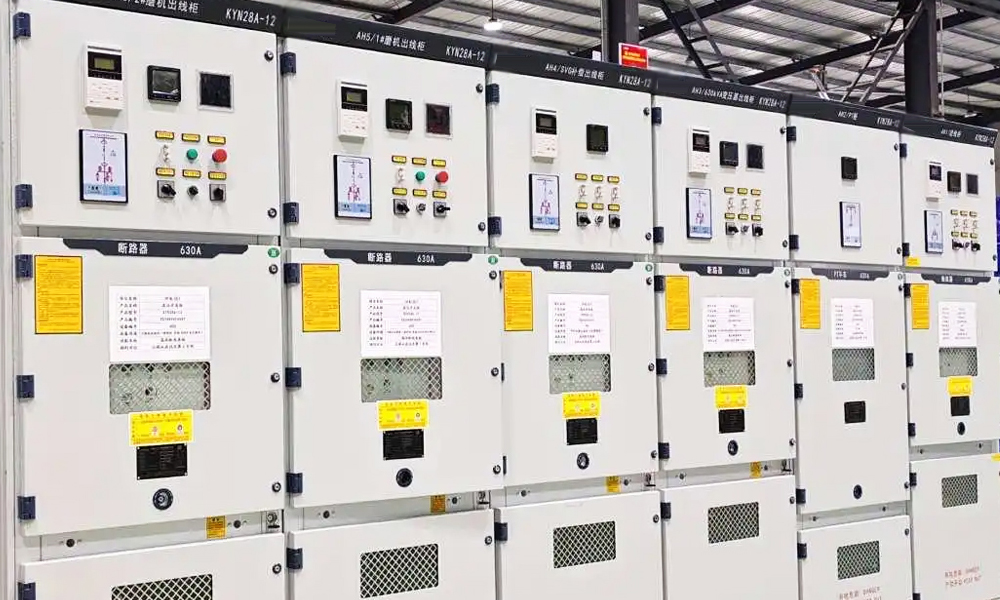
The withdrawable configuration used in metal-clad switchgear like the KYN28 or KYN61 series offers another advantage for data centers: a breaker can be racked out to the test or isolated position for inspection without de-energizing the entire bus. In a facility where downtime costs can exceed $100,000 per minute, this maintainability feature alone can justify the switchgear specification.
The Shift to SF₆-Free in the Data Center Sector
Data center operators have become some of the most influential advocates for SF₆-free switchgear, and their motivation is not primarily regulatory compliance. Many of the largest operators—including the hyperscale cloud providers—have made public commitments to achieve carbon neutrality or net-zero emissions within this decade. SF₆, with its global warming potential 24,300 times that of CO₂, is a direct contradiction to those commitments if it is present in the electrical infrastructure of every new facility.
A single medium voltage RMU or GIS panel containing a few kilograms of SF₆does not, by itself, represent a large fraction of a data center's carbon footprint. But large operators build dozens of facilities per year, each containing multiple switchgear panels. The cumulative SF₆inventory across a global portfolio can be measured in tons. Leakage rates are low but not zero, and the atmospheric lifetime of SF₆means that every gram emitted stays in the atmosphere for over three thousand years.
This is why data center tender specifications now routinely include "SF₆-free" as a mandatory requirement for medium voltage switchgear. The requirement is appearing not only in European markets, where the EU F-gas Regulation provides a legal framework, but in North America and Asia-Pacific as well. For switchgear manufacturers, the data center market has become a powerful commercial driver of SF₆-free product development—perhaps the most powerful outside the utility sector.
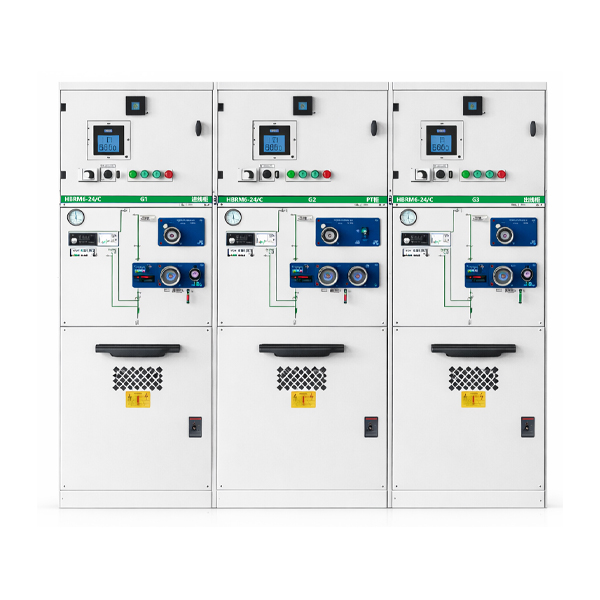
COTENELE supplies 24 kV SF₆-free ring main units and vacuum circuit breaker panels to data center projects, with dry air insulation and type-test certification to IEC 62271-200. The sealed-for-life stainless steel tank eliminates gas monitoring, refilling, and end-of-life recovery from the facility's operational procedures. For a data center operator, this means one less system to track, one less maintenance contract to manage, and one less item to explain in an ESG audit.
Part Two: Renewable Energy Projects
Wind Farm Collector Networks
A wind farm presents an electrical environment fundamentally different from a data center or an industrial plant. The individual wind turbine generators, typically rated from 2 MW to 8 MW each, are scattered across a geographic area that may span tens of square kilometers. Each turbine generates at low voltage—typically 690 V or 1000 V—and steps up to medium voltage through a pad-mounted transformer at the base of the tower. Medium voltage cables, usually at 33 kV or 36 kV, run from each turbine to a central collector substation where power is aggregated and stepped up again for transmission.
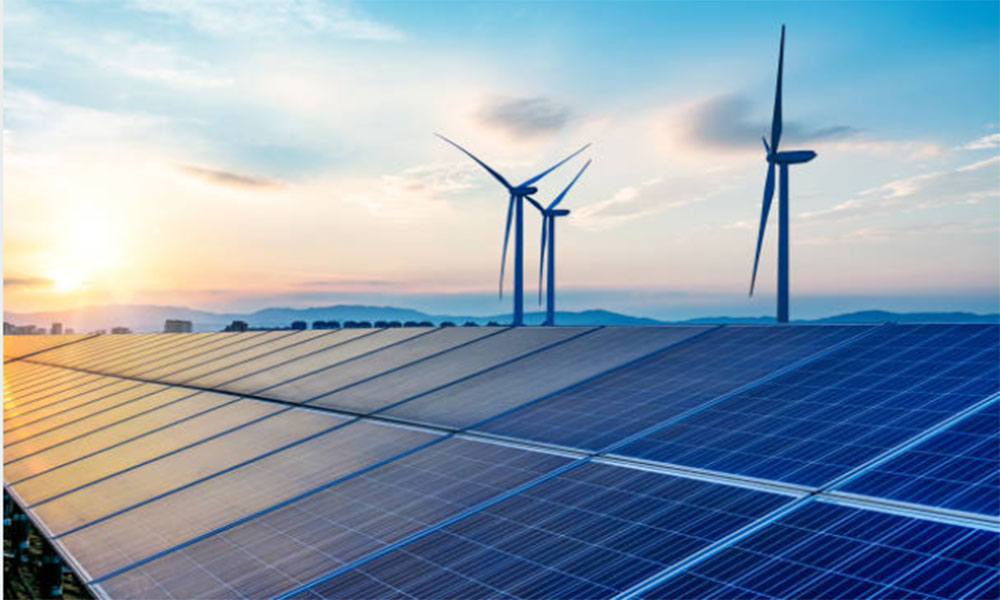
The switchgear in the collector substation must handle a combination of duties that no other application quite replicates. The circuit breakers protecting each collector feeder experience frequent switching operations as turbines start and stop in response to wind conditions. The fault current contribution from inverter-based wind turbines is fundamentally different from synchronous machine fault current—lower in magnitude, faster to decay, and sometimes difficult for conventional protection relays to discriminate from normal load current. And the substation itself is often in a remote location where maintenance visits are expensive, weather-dependent, and sometimes impossible for weeks during winter months.
Vacuum circuit breakers are well-suited to this environment. The high mechanical endurance of a modern VCB accommodates frequent switching without contact degradation. The vacuum interrupter is indifferent to the source of the fault current it must interrupt—whether it comes from a synchronous generator or an inverter-based resource, the arc quenching physics are the same. And the sealed-for-life construction of a modern VCB means there is nothing for a maintenance technician to inspect inside the interrupter, even if they could reach the site.
Solar PV and Energy Storage Systems
Utility-scale solar photovoltaic installations share some characteristics with wind farms—inverter-based generation, geographic dispersion, frequent switching as irradiance changes—but add their own complexities. Solar plants typically operate at lower voltage than wind farms: the medium voltage collection system may be 12 kV or 24 kV rather than 33 kV or 36 kV. The DC side of the plant, from the modules through the combiner boxes to the inverter input, operates at voltages up to 1500 V DC and requires a completely separate set of protection and isolation equipment.
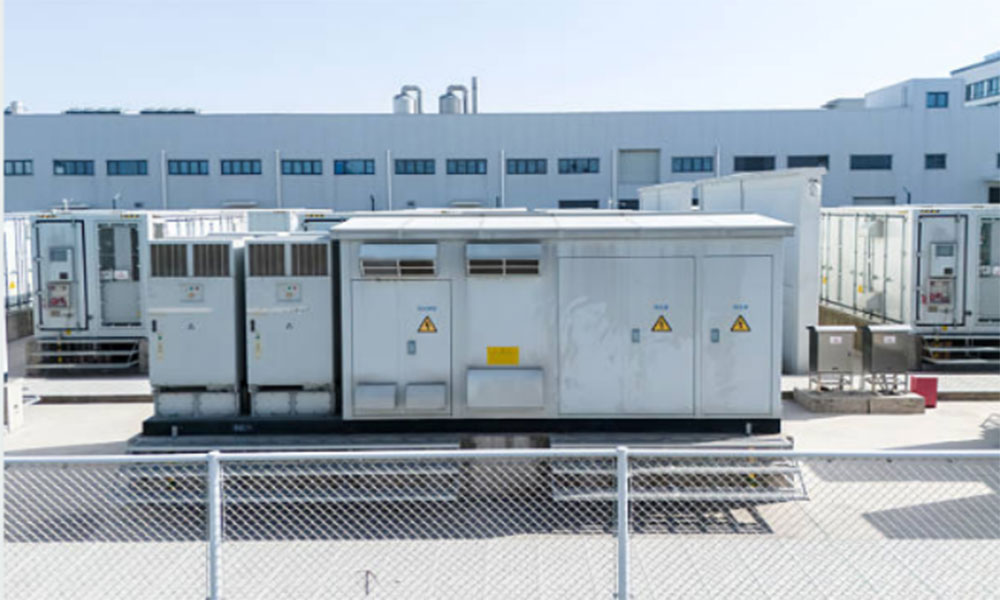
The growing co-location of battery energy storage systems with solar generation adds another layer of switchgear requirements. A battery energy storage system can charge from the grid or from the solar array and discharge back to the grid as needed, which means the medium voltage switchgear at the point of interconnection must handle bidirectional power flow. The protection settings must account for fault current contribution from the battery inverters, which can be substantial and fast-rising. And the switching duty on the breakers increases further, with multiple charge-discharge cycles per day adding to the mechanical operation count.
The Compliance and Documentation Layer
Renewable energy projects, particularly those developed by international independent power producers or financed by multilateral development banks, now carry documentation requirements that rival those of utility tenders. A medium voltage switchgear package for a wind farm or solar plant will typically require IEC type-test certificates for every circuit breaker and RMU, routine test reports from the factory, a declaration of conformity to applicable environmental regulations, and a reference list demonstrating prior delivery of similar equipment.
The reason is straightforward: project financing. The lenders and investors who provide capital for renewable energy projects conduct technical due diligence on every major equipment package. If the switchgear supplier cannot provide complete documentation, the project may face delays in reaching financial close. This is a risk that developers take very seriously.
COTENELE supplies medium voltage switchgear to renewable energy projects with a complete documentation package included as standard. Type-test certificates, routine test reports, and compliance declarations are provided at the tender stage, not after the order. For projects in Europe, this includes documentation demonstrating conformity with the EU F-gas Regulation. For projects in other regions, the package is tailored to local requirements.
The Technology Overlap: What Both Sectors Need
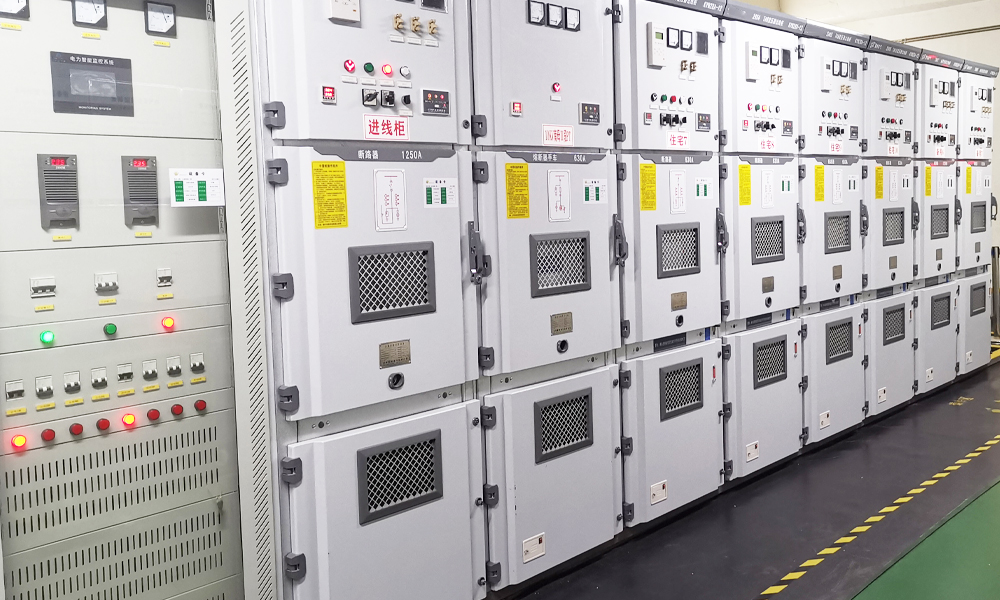
Despite their differences, data centers and renewable energy projects converge on a common set of switchgear requirements. Identifying this overlap helps explain why certain technologies and configurations have become dominant across both markets.
Compact footprint. Data centers value every square meter of white space. Renewable energy collector substations are often on land with limited available area. Both sectors specify switchgear that minimizes physical footprint without compromising access for maintenance. This is one reason metal-clad withdrawable switchgear and SF₆-free RMUs have gained share—they pack substantial functionality into a compact envelope.
Reliability without frequent maintenance. Data centers cannot afford downtime. Wind farms cannot afford sending a technician to a remote substation every month. Vacuum circuit breakers with sealed-for-life interrupters and RMUs with sealed gas tanks address this requirement directly.
SF₆-free as a baseline. For data centers, the driver is corporate sustainability commitments. For renewable energy projects, the driver is the incongruity of using a high-GWP gas in infrastructure that exists to produce clean energy. Both arrive at the same specification requirement.
Digital integration. Data centers were early adopters of intelligent switchgear with IEC 61850 communication, driven by the need to integrate electrical monitoring into the building management system. Renewable energy projects are following quickly, driven by the need for remote monitoring of unmanned sites. In both cases, switchgear that can report its own condition, log switching operations, and provide early warning of developing problems reduces operational cost and risk.
Complete documentation. Both sectors are dominated by sophisticated buyers—hyperscale data center operators, international renewable energy developers, infrastructure funds—who treat documentation as a gatekeeper requirement. If the paperwork is not complete, the equipment is not considered. This favors manufacturers who have invested in third-party type testing and who maintain organized documentation systems.
Selecting Switchgear for These Applications: Practical Considerations
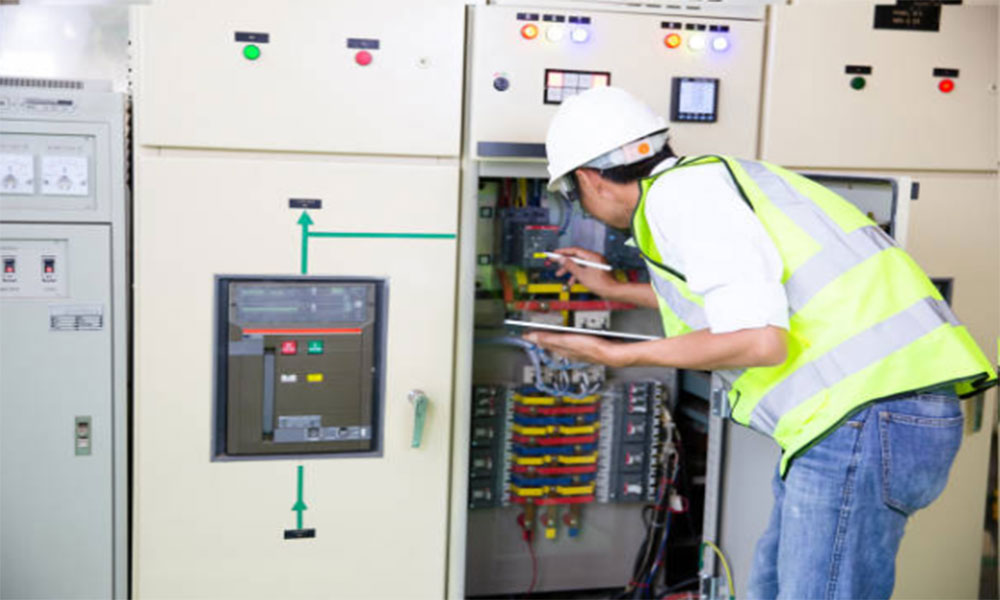
For project engineers and procurement teams working in either sector, several practical considerations should guide switchgear selection.
Start with the voltage and fault level, but do not stop there. Rated voltage and short-circuit breaking capacity are the minimum entry criteria. Beyond them, evaluate mechanical endurance, maintenance requirements over the project life, and the availability of local service support.
Verify type testing for the specific configuration. A manufacturer may have type-tested a standard module but not the specific combination of modules required for your single-line diagram. Confirm that the exact configuration has been tested, or that the manufacturer can provide engineering justification for extending the type-test coverage.
Ask about documentation before the order is placed. If a supplier cannot provide type-test certificates, routine test report templates, and a compliance declaration at the tender stage, they are unlikely to produce them promptly after the order. Documentation delays can hold up project financing and commissioning, and the time to discover them is before contract award.
Consider total lifecycle cost, not just purchase price. For a data center with a 15-year design life, the cost of a single unplanned outage dwarfs any difference in switchgear purchase price. For a wind farm with 50 turbines spread across a mountain range, the cost of sending a technician to inspect a breaker dwarfs the savings from choosing a lower-specification product. The switchgear is a small fraction of total project capital cost but a large fraction of the equipment that can cause catastrophic failure. This is not the place to optimize for lowest initial price.
Conclusion
Data centers and renewable energy projects represent two of the fastest-growing segments of the global medium voltage switchgear market. They are also the segments where the transition to sustainable, digitally integrated, SF₆-free equipment is advancing most rapidly.
The switchgear technologies that serve these markets well—vacuum interruption, dry air and solid insulation, withdrawable configurations with high mechanical endurance, integrated condition monitoring with IEC 61850 communication—are the same technologies that will define the broader switchgear industry over the next decade. The lessons learned in data center and renewable energy applications are shaping product development across all market segments.
For COTENELE, serving these sectors means providing 24 kV SF₆-free RMUs and vacuum circuit breaker panels that are type-tested, documentation-complete, and in serial production. It means understanding that a data center procurement team and a wind farm developer speak different technical languages but have the same underlying requirement: equipment that works reliably for decades, with minimal intervention, and with no environmental liability attached. Our product range and documentation systems are built accordingly.
Looking for Medium Voltage Switchgear for Your Next Project?
COTENELE supplies 12 kV to 40.5 kV vacuum circuit breakers, SF₆-free ring main units, and complete metal-clad switchgear for data center, renewable energy, utility, and industrial applications. All products are type-tested to applicable IEC standards with full documentation provided at tender stage.
About COTENELE
COTENELE is a specialized manufacturer of medium voltage switchgear, including SF₆-free eco-friendly gas insulated switchgear, vacuum circuit breakers, ring main units, and metal-clad panels for 12 kV to 40.5 kV applications. Our products serve data center operators, renewable energy developers, utilities, and industrial buyers across Europe, Asia, and the Middle East. Every product is type-tested to applicable IEC standards, with complete documentation provided for tender submission and project delivery.
Related News
- Smart Ring Main Units: Key Trends in Medium-Voltage Distribution Networks
- 24kV SF6-Free Switchgear Gains Momentum as Medium-Voltage Distribution Moves Toward Low-Emission Technologies
- How Can Medium Voltage Switchgear Improve Power Distribution Safety and Efficiency?
- How Does a Cable Distribution Box Improve Cable Management and Electrical Safety?
- How Low Voltage Switchgear Improves Electrical Safety and Power Management?
- How Does a Ring Main Unit Improve Power Distribution Reliability?
Leave me a message